Key takeaways
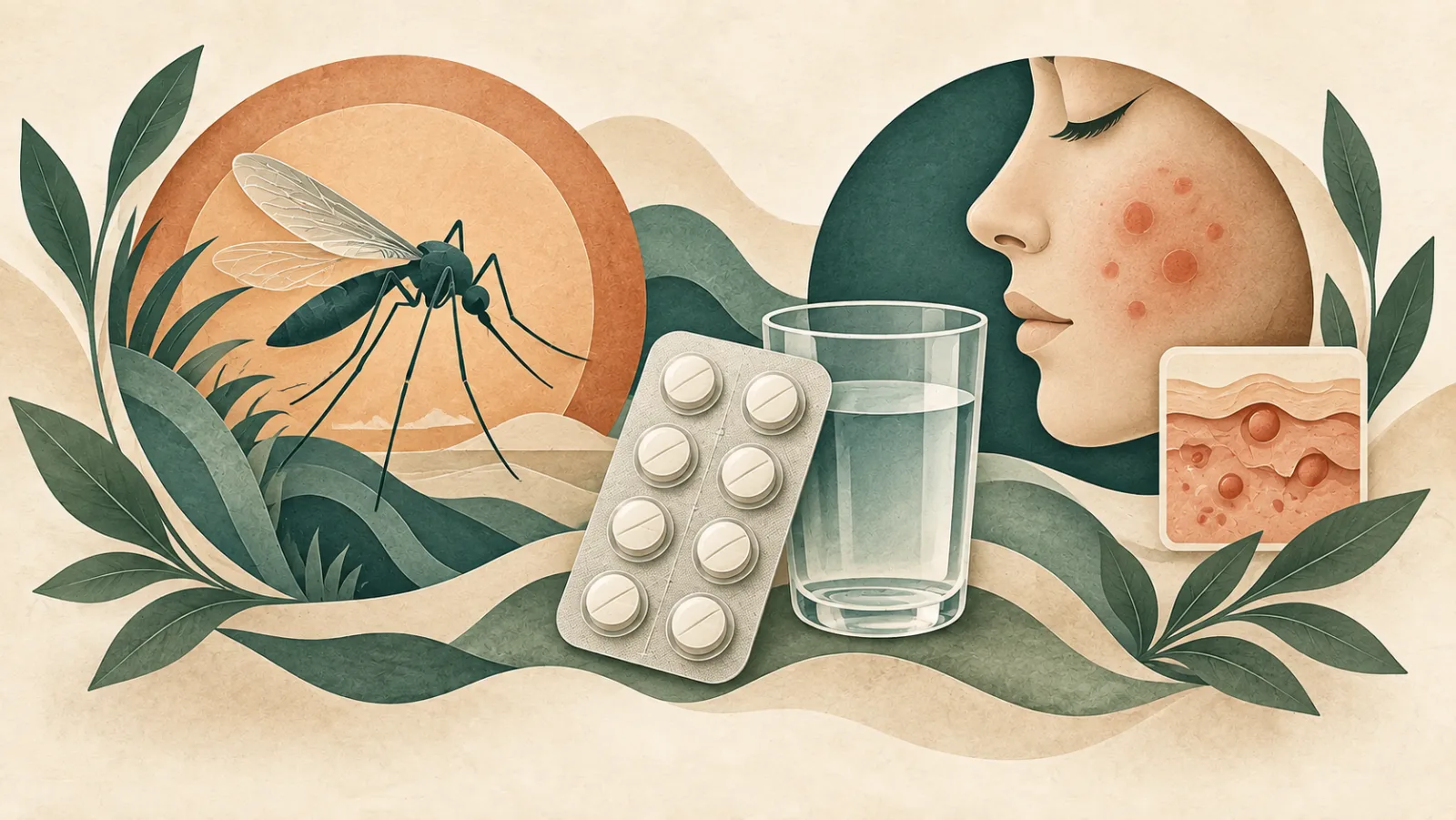
- Doxycycline can be used for malaria prevention, but the travel plan and prescribed course matter; a skin-treatment pack is not automatically a travel plan. CDC Yellow Book.
- Acne guidelines support doxycycline while recommending limited systemic-antibiotic use and combination with appropriate topical treatment. AAD acne guideline.
- A modified-release rosacea formulation has anti-inflammatory use and is not suitable for treating infections. Formulations are not interchangeable by assumption. UK Efracea prescribing information.
- Water, an upright position and sun protection address important practical risks, including oesophageal irritation and photosensitivity. CDC precautions.
- South Africa has a specific Schedule 2 exception for doxycycline intended and labelled for malaria chemoprophylaxis in people aged eight and older. NICD malaria information.
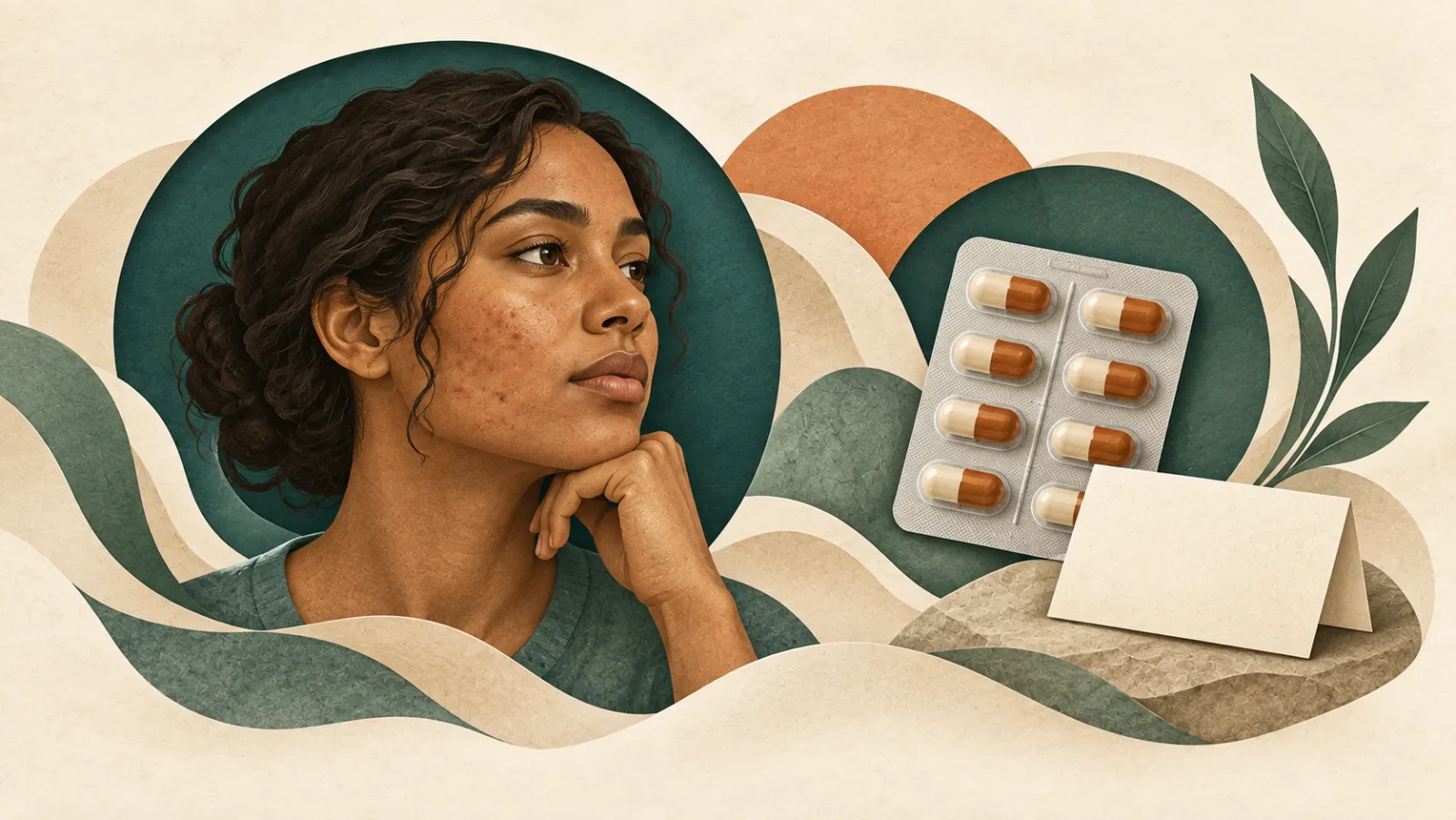
A capsule supplied for rosacea may contain doxycycline at an exposure intended to reduce inflammation rather than treat infection. The UK Efracea label says exactly that. The CDC malaria course, by contrast, begins 1 to 2 days before entering a risk area and continues for 4 weeks after leaving it. The name of the ingredient alone cannot tell you whether the pack in your bathroom cabinet covers the trip. Efracea information, CDC Yellow Book.
Can doxycycline prescribed for acne also prevent malaria?
A pharmacist or travel clinician can check whether the existing doxycycline treatment meets the malaria-prevention plan.
The CDC says people already taking long-term doxycycline for acne may not need an additional medicine. It gives different advice for minocycline: there are insufficient data for its malaria-prevention efficacy. Efracea, the lower-exposure rosacea formulation, is also unsuitable for treating infection. The assessment needs the product, the itinerary and the person’s health history. CDC guidance, Efracea information.
Take the pack and the full itinerary, including rural stops, accommodation and season of travel. The CDC identifies these as relevant to malaria risk. Ask how skin treatment will be coordinated with the travel course and make sure the supply covers the 4 weeks after leaving the malaria area. Doxycycline does not eliminate all dormant liver forms of malaria parasites, so the return-home plan still matters.
Use mosquito-bite precautions as well as the medicine. Prevention is not completely effective: fever during or after travel in a malaria area needs prompt assessment and testing, even after a correctly completed course. CDC Yellow Book.
Why are acne and rosacea treatments different?
Acne treatment uses doxycycline as an antibiotic alongside topical therapy; Efracea is formulated for anti-inflammatory treatment of rosacea.
The AAD acne guideline includes doxycycline, minocycline and sarecycline among systemic options. Its good-practice recommendations are to limit systemic antibiotic use and combine it with benzoyl peroxide and other topical treatments. Recurrent spots do not justify leaving someone on an antibiotic alone indefinitely. AAD guidance.
The UK Efracea formulation is designed for inflammatory rosacea lesions at exposure below conventional antimicrobial treatment. Its product information says it should not be used to treat infections and does not claim that resistance risk is impossible. Efracea prescribing information.
| Purpose | What to verify |
|---|---|
| Malaria prevention | Destination, suitability and the complete travel-related course |
| Acne | Why an oral antibiotic is needed and the accompanying topical plan |
| Rosacea | The exact formulation and the inflammatory symptoms being treated |
Our Soolantra and rosacea article covers a topical alternative. For acne requiring a different systemic approach, see isotretinoin benefits and precautions.
Which everyday precautions make the biggest difference?
Protect the oesophagus and skin, and check interactions against the exact product.
The CDC advises sufficient water and avoiding doxycycline immediately before lying down. Its prescribing table says to avoid lying down for 30 minutes and take it at least an hour before bed. Stay upright when swallowing it. Painful swallowing or chest pain afterwards needs advice. Photosensitivity can look like an exaggerated sunburn, so use clothing, shade and sunscreen and avoid prolonged direct sun. CDC practical precautions.
Efracea’s instructions specify an empty stomach, at least one hour before or two hours after a meal. They also separate calcium, iron, zinc and magnesium-containing products from doxycycline by 2 to 3 hours afterwards. That includes some antacids, supplements, dairy products and calcium-fortified juices. Check the instructions for your exact formulation, because the CDC permits food with doxycycline used for malaria prevention. Mention retinoids too: the Efracea label advises avoiding concurrent isotretinoin because of intracranial-pressure risk. Efracea interaction information.
Doxycycline is not a malaria-prevention option during pregnancy or for children under eight under CDC guidance. A travel clinician can discuss suitable alternatives. CDC contraindications. Severe or persistent diarrhoea, an allergic reaction or a significant skin reaction requires medical advice. Product safety information.
Can a pharmacist supply it for malaria prevention in South Africa?
Yes, for the specific intended-and-labelled malaria use covered by the scheduling exception.
The NICD states that doxycycline is Schedule 2 when intended and labelled for malaria chemoprophylaxis in adults and children aged eight years and older. It can then be obtained from a pharmacist without a prescription. This is not a blanket over-the-counter classification for every doxycycline pack or for acne treatment. NICD supply information.
Regulatory note
South Africa, checked 8 September 2026: The NICD scheduling exception above is purpose- and label-specific. A pharmacist must still assess the travel plan and suitability.
Do and don’t
Do:
- Bring the current pack, itinerary, supplements and other medicines to the combined skin-treatment and travel review.
- Check the full course and the formulation-specific instructions about meals and minerals.
Don’t:
- Assume every doxycycline formulation prevents malaria, or use leftover antibiotics without a plan.
- Ignore fever during or after travel, even if you took preventive medicine.