
Digestive Health
Proton pump inhibitors and other acid-reducing tablets and capsules lead this range, alongside medicines for bowel motility, constipation, inflammatory bowel disease and pancreatic insufficiency, including Nexium, Protonix and Prilosec.


Key points
- Digestive health spans more than reflux and indigestion, and also covers motility, constipation, inflammatory bowel disease and pancreatic insufficiency.
- Dyspepsia describes a group of upper-abdominal symptoms rather than one cause.
- Six proton pump inhibitors in this range, including Nexium, Prilosec and Protonix, are listed for reflux, ulcer disease or erosive oesophagitis.
- Digestive symptoms can need different investigations and treatments depending on their cause.
Nexium, Prilosec and other proton pump inhibitors
Esomeprazole is the proton pump inhibitor in Nexium, omeprazole is in Prilosec, and pantoprazole is in Protonix. Pariet (rabeprazole), Prevacid (lansoprazole) and Dexilant (dexlansoprazole) complete this group of six. All six are listed for gastro-oesophageal reflux disease, with some also listed for ulcer disease or erosive oesophagitis.
Motilium, Colospa and other digestive medicines
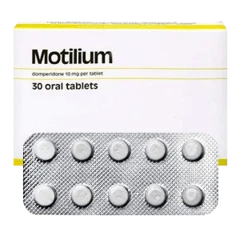
Motilium (domperidone) is listed for nausea, vomiting and dyspepsia. Colospa (mebeverine) is listed for irritable bowel syndrome and gastrointestinal spasm. Asacol (mesalazine) is listed for ulcerative colitis and Crohn’s disease. Motegrity (prucalopride) is listed for chronic idiopathic constipation, and Creon (pancrelipase) is listed for exocrine pancreatic insufficiency.
Further reading
What digestive medicines does Direct Meds sell?
Direct Meds lists 11 digestive medicines. Together they contain 11 different active ingredients, including esomeprazole, pantoprazole and omeprazole. Examples include Nexium and Protonix; all 11 medicines are listed on this page.
Do you sell proton pump inhibitors in South Africa?
Yes. Proton pump inhibitors on Direct Meds include Nexium (esomeprazole), Protonix (pantoprazole), Prilosec (omeprazole) and Pariet (rabeprazole).
What are digestive medicines used for?
Between them, the digestive medicines on Direct Meds are used for gastro-oesophageal reflux disease, peptic ulcer disease, duodenal ulcer, erosive oesophagitis and pathological hypersecretory conditions.
What forms do digestive medicines come in?
Mostly as tablets, with some capsules. The forms and strengths are listed on each product page.
Which of these digestive medicines is right for me?
Start with the active ingredient: there are 11 different ones in this range. Products with the same active ingredient contain the same medicine. Compare their strength, form and price per unit. Each product page's details table lists uses, how quickly it works, side effects and interactions. If you take other medicines, are pregnant or have a long-term condition, check with a doctor or pharmacist first.
Will I receive branded or generic digestive medicines?
Usually a generic. Names such as Nexium and Protonix identify the medicine: you receive a generic with the same active ingredient and strength. The generic brand and maker depend on stock.
What you will receive →How much do digestive medicines cost in South Africa?
Compare each medicine, strength and pack on its product page. Prices are shown in rand, converted from US dollars, so the final rand total can change with the exchange rate. Larger packs usually cost less per unit.
Payment and prices →Do I need a prescription to buy digestive medicines in South Africa?
No. Direct Meds does not ask for a prescription to order digestive medicines. We are a broker, not a dispensing pharmacy. We arrange orders and delivery with our affiliated supplier on your behalf.
Ordering without a prescription →Can I order digestive medicines online in South Africa?
Yes. Choose a product, strength and pack, then check out. Our affiliated supplier delivers across South Africa. Estimated delivery is 7 days with Express Delivery, which includes online tracking, or up to 3 weeks with Regular Delivery.
How ordering works →