
Key takeaways
- Soolantra contains ivermectin cream and treats inflammatory bumps and spots of rosacea in adults. Galderma product information.
- Rosacea can involve flushing, visible vessels and eye symptoms as well as spots; one cream does not address every feature. AAD treatment guidance.
- A temporary flare is described in the product information, but severe worsening is a reason to stop and seek advice. Soolantra warnings.
- Rosacea also occurs in darker skin, where redness may be less obvious. AAD guidance for skin of colour.
Burning or stinging when a product is applied, acne-like breakouts that acne treatment will not clear, or a warm feeling that persists can point to rosacea. A dermatologist diagnoses rosacea by examining your skin and eyes and asking questions, and may test to rule out conditions such as lupus, according to the American Academy of Dermatology. A familiar-looking bump does not establish that the same medicine will help.
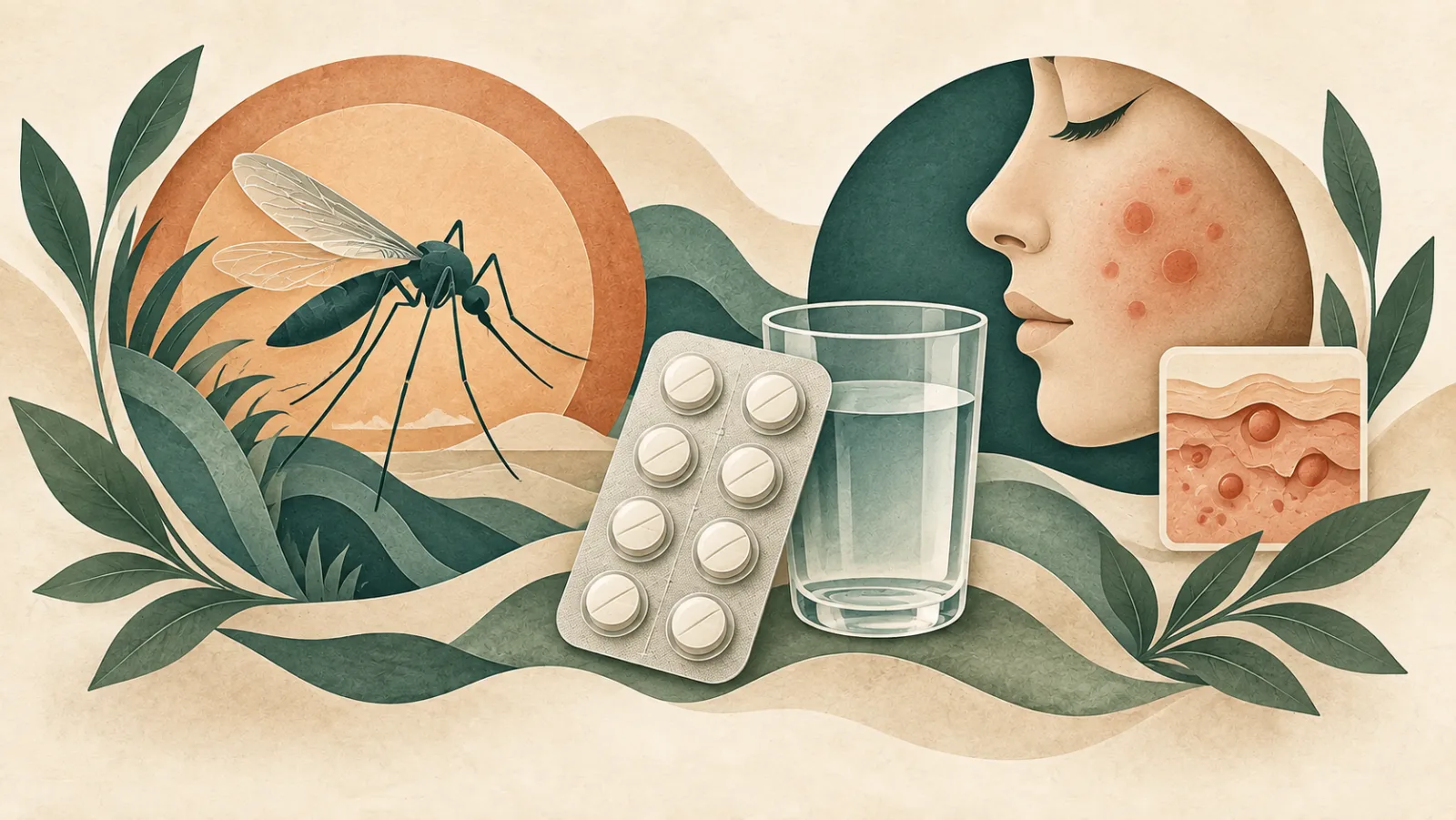
Soolantra is one option for the inflammatory bumps and pustules of rosacea. The American Academy of Dermatology groups ivermectin cream under treatments for acne-like breakouts and says it reduces inflammation. It is not aimed at every feature of rosacea.
What does Soolantra actually treat?
Soolantra is indicated for the topical treatment of inflammatory lesions of rosacea (papulopustular) in adults.
The UK product information describes treatment for these bumps and pustules. That is product-specific evidence, not a reason to treat all facial redness or acne with ivermectin. Soolantra indication.
| Main concern | Why the distinction matters |
|---|---|
| Inflamed bumps and pustules | The feature Soolantra is intended to treat |
| Persistent redness or flushing | May need a separate treatment approach |
| Visible small blood vessels | A cream for spots may not address them |
| Painful, gritty or irritated eyes | Needs assessment beyond a facial cream |
Rosacea care is often a combination of treatment, gentle skin care and attention to personal triggers. AAD treatment overview.
Does Demodex explain every case of rosacea?
No: Demodex is part of the discussion, not a complete diagnosis or a promise of a cure.
Ivermectin has activity against mites and anti-inflammatory effects. The product information notes that its precise mechanism in rosacea is not fully established. The presence of a plausible mechanism does not prove that every flare is caused by an infestation. Mechanism and clinical evidence.
Symptom tracking is more useful than trying to infer a mite count from how the skin feels. The product information states the mechanism in rosacea is not known and may be linked to both anti-inflammatory effects and activity against Demodex mites. Use gentle cleansing; harsh products intended to ‘sterilise’ the face can irritate.
Should you push through a “die-off” reaction?
Severe worsening is a sign to stop, not proof that mites are dying.
The product information describes a transient aggravation of rosacea that usually resolves within 1 week if treatment continues, which may happen as a reaction to dying Demodex mites. If the worsening is severe with a strong skin reaction, the treatment should be discontinued. Clinical trials reported skin burning sensation, skin irritation, itching and dry skin as the most common side effects. Rosacea aggravation was uncommon. Tell the prescriber if your skin becomes substantially worse, and note when the change started and whether you added another product. Swelling of the face with breathing difficulty needs emergency care. Soolantra safety information.
Section 4.2 of the Soolantra SmPC sets the stopping point: in case of no improvement after 3 months, treatment should be discontinued, although a course that has worked may be repeated. Put that 3-month check in the diary when the first tube is dispensed, rather than reordering on autopilot.
What should South African readers look for?
Dermatologists diagnose rosacea by examining your skin and eyes and asking questions.
In darker skin, dermatologists list warning signs that include a warm feeling most of the time, dry swollen skin with darker patches, a dusky brown discoloration, acne-like breakouts that acne treatment will not clear, and burning or stinging when applying skin care products. Rosacea can also affect the eyes, with signs like swollen warm eyelids, red bloodshot eyes, crusty eyelids, tearing or dry eyes, and burning or light sensitivity. These symptoms should be mentioned even when a photograph looks relatively normal. AAD skin-of-colour guidance.
Soolantra cream is for cutaneous use on facial skin only. Oral ivermectin tablets and veterinary ivermectin preparations are not substitutes for this topical rosacea treatment. Confirm the prescribed formulation with the prescriber rather than selecting by the active ingredient alone. For separate facial concerns, read tretinoin and irritation and pigmentation after inflammation; neither is part of a rosacea routine.
Do and don’t
Do:
- Agree with the prescriber on which symptoms the treatment is expected to improve.
- Ask about use during pregnancy or breastfeeding; Soolantra is not recommended during pregnancy.
Don’t:
- Put the cream in your eyes. It is for facial skin only, avoiding the eyes, lips and mucosa.
- Use severe irritation as evidence that mites are dying. Severe worsening with a strong skin reaction is a stated reason to stop treatment.