
Isotretinoin
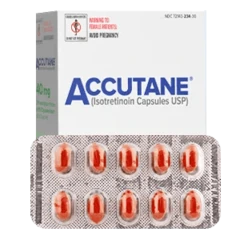
Three isotretinoin capsule brands line this shelf: Accutane, Accufine and Isotroin, all used to treat Severe Recalcitrant Nodular Acne that has not cleared with antibiotics.
Key points
- Isotretinoin belongs to the retinoid class and attacks all four causes of acne: bacteria, clogged pores, excess oil and inflammation.
- It carries a boxed warning for severe birth defects and pregnancy loss; it must not be taken by anyone who is or may become pregnant.
- Accutane is the original brand by Roche; Accufine and Isotroin are Indian generic versions of the same molecule.
How does isotretinoin work?
Isotretinoin shrinks the oil-producing glands in your skin and cuts the amount of oil they release. At the doses used for acne, it also slows the buildup of dead skin cells that clog pores.
The exact mechanism is unclear, but the result is straightforward: less oil, fewer clogged pores and a less hospitable environment for acne-causing bacteria. About 85% of patients see permanent clearing after one course.
Brands and forms in this catalogue
All three products in this Skin Care listing are oral capsules containing isotretinoin. What separates them is the brand behind the molecule and the strength range each one covers.
Accutane is the original brand, first marketed by Roche, and comes in five strengths from 5 mg up to 40 mg. Accufine, from Healing Pharma in India, is a generic version available at 30 mg. Isotroin, manufactured by Cipla, covers 10 mg, 20 mg and 30 mg. Different companies make the same molecule under their own names, which is why several brands exist for one ingredient. A South African reader may recognise Accutane from older packs or international references, while Accufine and Isotroin are Indian generic lines carrying the same active ingredient.
Further reading
What is isotretinoin used for?
Isotretinoin is used to treat severe recalcitrant nodular acne that has not cleared with antibiotics. It belongs to the retinoid class and acts on bacteria, clogged pores, excess oil and inflammation.
How does isotretinoin work on acne?
Isotretinoin shrinks the oil-producing glands in your skin and cuts the amount of oil they release. It also slows the buildup of dead skin cells that clog pores, which leaves less oil, fewer clogged pores and a less hospitable environment for acne-causing bacteria.
How long does isotretinoin take to work?
Isotretinoin usually starts to work within 2 to 4 weeks.
What are the side effects of isotretinoin?
Common side effects include dry skin, dry eyes and chapped lips. Moderate effects can include elevated triglycerides, elevated liver enzymes and musculoskeletal pain, while suicidal ideation and severe liver damage (hepatotoxicity) need immediate medical attention. Speak to your doctor or pharmacist if you are worried about any reaction.
Who should not take isotretinoin and what should they avoid?
Isotretinoin must not be taken by anyone who is or may become pregnant because of severe birth defects and pregnancy loss. It is also contraindicated if you have hypersensitivity to isotretinoin or hepatic impairment, and it interacts with tetracycline, vitamin A and alcohol. Ask your doctor or pharmacist before taking it with anything else.
In which products can I find isotretinoin?
On Direct Meds, isotretinoin comes as Accutane, Accufine and Isotroin. Compare their forms, strengths and packs.
How much does isotretinoin cost in South Africa?
Compare the rand prices for each product, strength and pack above. Prices are converted from US dollars.
Payment and prices →Do I need a prescription for isotretinoin in South Africa?
No, not online. Direct Meds does not ask for a prescription to order isotretinoin. We are a broker, not a dispensing pharmacy. We arrange orders and delivery with our affiliated supplier on your behalf.
Ordering without a prescription →Can I buy isotretinoin online in South Africa?
Yes. Our affiliated supplier delivers across South Africa. Estimated delivery is 7 days with Express Delivery, which includes online tracking, or up to 3 weeks with Regular Delivery.
How ordering works →Related articles

22 Sept 2026 ⋅ 4 min read
Low-dose isotretinoin: what changes and what does not
Understand low-dose isotretinoin for acne, including pregnancy precautions, side effects, monitoring and why a smaller dose still needs supervision.
Read guide