
Eye Care
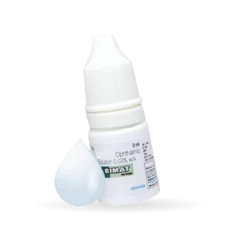
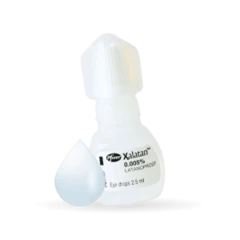
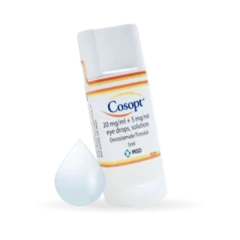
Glaucoma eye drops make up most of this range, including Bimat, Xalatan, Cosopt, Combigan and Alphagan, alongside an eyelash-growth solution, an eye inflammation combination and an oral tablet.
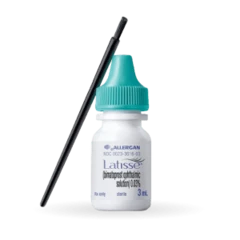
Latisse Ophthalmic Solution
0.03%
Bimatoprost solution for inadequate eyelashes. It extends the growth phase of each lash, so they become longer and denser.
Key points
- Eye drops are the most common medicine treatment for glaucoma, per the National Eye Institute.
- Glaucoma drops work by reducing fluid production in the eye or helping fluid drain away, depending on the medicine.
- Monitoring matters because glaucoma treatment aims to slow optic nerve damage and vision loss, not reverse it.
- This range also includes an eyelash-growth solution, an antibacterial and anti-inflammatory eye combination, and an oral tablet used for glaucoma among other conditions.
Glaucoma and ocular hypertension eye drops
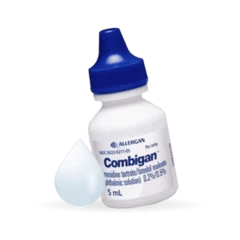
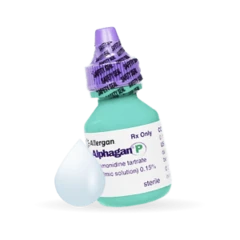
Bimatoprost is the prostaglandin analogue in Bimat, and Xalatan contains latanoprost, another prostaglandin analogue. Timolol is the beta blocker in Cosopt, paired with dorzolamide, and in Combigan, paired with brimonidine; Alphagan contains brimonidine alone. Bimat, Xalatan, Cosopt, Combigan and Alphagan are all listed for open-angle glaucoma and ocular hypertension.
Eyelash growth, ocular inflammation and other uses
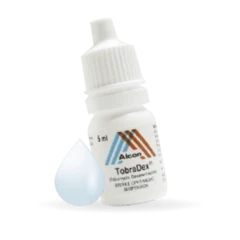
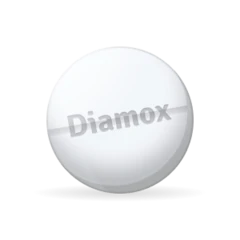
Latisse Ophthalmic Solution also contains bimatoprost, but is listed for eyelash hypotrichosis rather than glaucoma. Tobradex combines tobramycin, an antibiotic, with dexamethasone, a steroid, for ocular inflammation. Diamox (acetazolamide) is an oral tablet listed for glaucoma, altitude sickness and oedema, unlike the other medicines here, which are eye drops.
Further reading
Which eye medicines can I buy on Direct Meds?
Direct Meds lists 8 eye medicines. Together they contain 8 different active ingredients, including bimatoprost, timolol and brimonidine. Examples include Bimat and Latisse Ophthalmic Solution; all 8 medicines are listed on this page.
Can I buy Latisse in South Africa?
Yes. Bimatoprost eye products on Direct Meds include Latisse Ophthalmic Solution (bimatoprost) and Bimat (bimatoprost).
What are eye medicines used for?
Between them, the eye medicines on Direct Meds are used for open-angle glaucoma, ocular hypertension, eyelash hypotrichosis and ocular inflammation.
Do eye medicines come as tablets or other forms?
Mostly as eye drops, with some tablets. The forms and strengths are listed on each product page.
How do I compare eye medicines?
Start with the active ingredient: there are 8 different ones in this range. Products with the same active ingredients contain the same medicine. Compare their strength, form and price per unit. Each product page's details table lists uses, how quickly it works, side effects and interactions. If you take other medicines, are pregnant or have a long-term condition, check with a doctor or pharmacist first.
Will I receive branded or generic eye medicines?
Usually a generic. Names such as Xalatan and Cosopt identify the medicine: you receive a generic with the same active ingredients and strength. Others, such as Bimat and Latisse Ophthalmic Solution, are listed under their own names; for these you receive a branded generic or generic with the same active ingredient, depending on stock.
What you will receive →How are eye medicines priced?
Compare each medicine, strength and pack on its product page. Prices are shown in rand, converted from US dollars, so the final rand total can change with the exchange rate. Larger packs usually cost less per unit.
Payment and prices →Can I buy eye medicines over the counter in South Africa?
Yes, online. Direct Meds does not ask for a prescription to order eye medicines. We are a broker, not a dispensing pharmacy. We arrange orders and delivery with our affiliated supplier on your behalf.
Ordering without a prescription →Where can I buy eye medicines online in South Africa?
Choose a product, strength and pack, then check out. Our affiliated supplier delivers across South Africa. Estimated delivery is 7 days with Express Delivery, which includes online tracking, or up to 3 weeks with Regular Delivery.
How ordering works →Related articles

22 Sept 2026 ⋅ 4 min read
Latisse and bimatoprost: eyelashes versus glaucoma
Understand bimatoprost for eyelash growth versus glaucoma treatment, including Latisse's US approval, eye-colour changes and important precautions.
Read guide