Key points
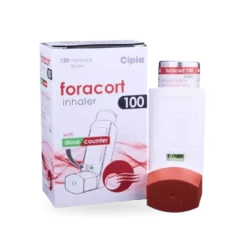
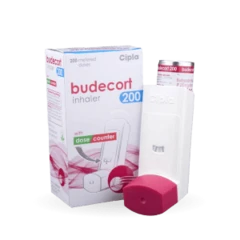
- Budecort Inhaler supplies budesonide alone; Foracort Inhaler pairs it with the bronchodilator formoterol in three strengths.
- Inhaled budesonide is used to prevent asthma attacks but will not stop one that has already started; a fast-acting rescue inhaler is needed for that.
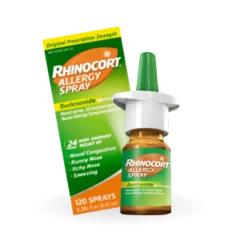
- Rhinocort applies the same corticosteroid to the nasal passages for allergic rhinitis and nasal polyps rather than the lungs.
How does Budesonide work?
Budesonide is a corticosteroid. It reduces swelling and irritation in the airways, which eases the wheezing, coughing and chest tightness that signal an asthma attack. Because inhaled budesonide acts locally in the lungs, it carries less risk of whole-body steroid effects than a tablet or injection.
When paired with formoterol, as in Foracort Inhaler, the bronchodilator relaxes the muscles around the airways while budesonide calms the inflammation underneath. The two actions address different parts of the same problem.
Three products share budesonide as their active ingredient, but they are not interchangeable. Budecort Inhaler, made by Cipla, supplies budesonide alone in 100 mcg and 200 mcg strengths. Foracort Inhaler, also from Cipla, combines budesonide with formoterol across three strengths (100/6, 200/6 and 400/6 mcg) for Asthma and Chronic Obstructive Pulmonary Disease. Rhinocort, the brand-name version from AstraZeneca, treats allergic rhinitis and nasal polyps with the same corticosteroid delivered to the nose. The two Cipla inhalers sit within Respiratory Health; Rhinocort is listed under Allergy Relief.
Further reading