
Postmenopausal Osteoporosis
Postmenopausal osteoporosis is a condition in which bones become fragile and more likely to break. Women lose bone rapidly in the first few years after the menopause, making them particularly at risk.

Key points
- Osteoporosis develops when the body loses too much bone, makes too little bone, or both; even a minor bump or a fall may then cause a break.
- It is often called a silent disease because bone weakening cannot be felt; a broken bone is frequently the first sign, though some people notice height loss or a curving upper back.
- Approximately one in two women and up to one in four men aged 50 and older will break a bone due to osteoporosis.
- Treatment focuses on preventing and managing broken bones and taking medicine to strengthen bones, with the decision based on the individual’s future fracture risk.
Medicines listed for Postmenopausal Osteoporosis
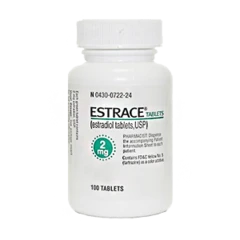
The four listed products are all tablets, each containing a different active ingredient. Two are hormones used around the menopause: Estradiol (Estrace) and Tibolone (Tibofem). The other two belong to separate classes: raloxifene (Evista) is a selective oestrogen receptor modulator, and risedronate (Actonel) is a bisphosphonate.